
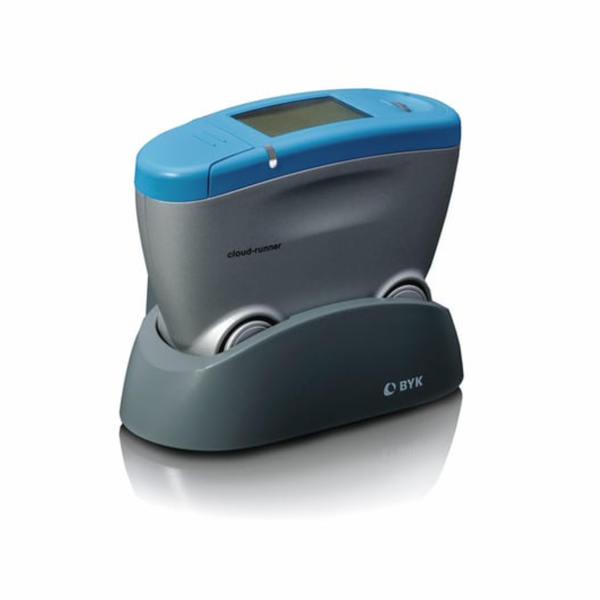
Choosing the right paint QC equipment distributor in Indonesia is not a decision to take lightly. Inauthentic instruments, improper calibration, or inadequate after-sales support can result in operational losses and undermine the credibility of your QC data in the eyes of customers.
Purchasing QC equipment for the paint and coating industry is often treated like buying ordinary equipment: find the best price, compare several offers, and choose the cheapest option. This approach may make sense for office supplies or consumables. However, for precision instruments such as gloss meters, spectrophotometers, and wave-scan instruments, choosing based primarily on price can ultimately become far more expensive.
A common scenario is when a company purchases a gloss meter from an unauthorized reseller at a price 20–30% lower than the official price. The instrument arrives without a calibration certificate that is traceable to international standards. A year later, an OEM customer questions the validity of the QC data used to support a conformity claim. The company then has difficulty proving the validity of its measurements.
This article provides a practical guide to what you should evaluate when choosing a paint QC equipment distributor in Indonesia, from authorized distributor status and calibration documentation to after-sales technical support. The goal is simple: to ensure that you receive instruments that are not only accurate but also defensible—meaning their measurement results can be properly justified to customers, auditors, and against international standards.
Why Does Choosing the Right Paint QC Equipment Distributor Matter?
Paint QC instruments—including gloss meters, spectrophotometers, colorimeters, haze meters, and film thickness gauges—are more than just measuring devices. In a competitive industry, they form the foundation of the quality claims you make to your customers.
When the gloss value or color ΔE you report cannot be compared with your customer’s data because the instruments are not calibrated to the same standards, the issue is more than a technical dispute. Long-term business trust is also at stake.
There are three major risks associated with choosing the wrong QC equipment distributor:
1. Inauthentic or Refurbished Instruments
Instruments purchased through unauthorized distribution channels may be refurbished units, ex-demo units, or even replicas that do not meet the manufacturer’s specifications.
The result is unreliable measurement data that can compromise QC decisions and customer confidence.
2. Calibration Without Clear Traceability
Precision instruments require calibration that is traceable to recognized national or international measurement standards, such as PTB, NIST, or equivalent standards.
Without clear traceability, your QC data lacks a valid metrological foundation and may be rejected during supplier audits conducted by automotive OEMs or major corporate customers.
3. Lack of After-Sales Support
If an instrument fails and there is no official source for spare parts or adequate technical service, unexpected QC downtime can occur.
For paint production lines, QC downtime can cost significantly more than the initial price difference between an authorized distributor and an unauthorized reseller.
6 Tips for Choosing a Good and Trusted Paint QC Equipment Distributor in Indonesia
1. Verify the Manufacturer’s Authorized Distributor Status
An authorized distributor has a direct contractual relationship with the instrument manufacturer. This means the distributor obtains products through a verified supply chain rather than from secondary markets or unauthorized importers.
Before choosing a distributor, ask the following questions:
- Do they have an official distributor certificate or appointment letter from the instrument manufacturer that they can provide?
- Can their status as an authorized distributor or authorized dealer be confirmed on the manufacturer’s official website?
- How long have they been an official distribution partner of the manufacturer?
Verifying authorized distributor status is one of the simplest ways to reduce the risk of purchasing non-authentic or unsupported paint testing equipment.
2. Make Sure the Calibration Certificate Has Clear Traceability
This is one of the most frequently overlooked technical aspects during procurement, yet it is often a major concern during audits.
Every precision QC instrument should be supplied with a traceable calibration certificate. Calibration traceability means that the instrument’s calibration can be linked back to recognized national or international measurement standards, such as PTB (Physikalisch-Technische Bundesanstalt) in Germany or NIST (National Institute of Standards and Technology) in the United States.
Calibration traceability is important because:
- IATF 16949 requirements for the automotive industry include Measurement System Analysis (MSA) using instruments with traceable calibration.
- ISO 9001:2015 audits may examine the validity of your measurement system, including verifiable calibration records.
- Major OEM customers commonly require traceable calibration data as part of their supplier qualification audits.
For this reason, calibration should not be treated as an optional document. It is an important part of the technical credibility of your QC measurement system.
3. Evaluate After-Sales Technical Support
Paint QC instruments are not one-time purchases. Their service life can reach 5 to 10 years or more. During this period, you may need periodic calibration, replacement reference tiles, repairs, firmware updates, or software updates.
A distributor that cannot provide adequate long-term support represents an operational risk.
Before making a purchasing decision, ask:
- Do they have trained technicians capable of servicing the instruments they sell, or do they rely entirely on overseas manufacturers for repairs?
- What is the average repair turnaround time, and is a temporary loaner unit available during the repair process?
- Is periodic calibration service available, and do their calibration certificates meet traceability requirements?
- Are replacement reference tiles for gloss meters available locally, or must they be ordered directly from the manufacturer with a lead time of several weeks?
(Also read:Why the Automotive Industry Relies on BYK-Gardner as Paint QC Equipment)
4. Check the Completeness of the Included Documentation
QC instruments purchased from an authorized distributor should come with a comprehensive documentation package—not just the instrument and charger.
These documents provide important evidence that the instrument meets its claimed specifications and has undergone the appropriate verification process.
The documentation should include:
- Factory calibration certificate
- Certificate of Conformity (CoC)
- Operating manual
- Certified calibration reference tile
- Official warranty card
When comparing paint QC equipment distributors in Indonesia, documentation should therefore be evaluated alongside price, specifications, and delivery time.
5. Ask About Stock Availability and Lead Time
A QC instrument that fails in the middle of a production cycle can interrupt the QC process across an entire production line.
To minimize this risk, it is important to understand how quickly the distributor can provide replacement instruments or critical spare parts.
Key points to evaluate include:
- Does the distributor maintain instrument stock in Indonesia, or must every unit be ordered directly from the manufacturer?
- What is the standard lead time for instruments that are not in stock? Is expedited shipping available for urgent requirements?
- Are replacement reference tiles available from local stock? Gloss meter reference tiles need to be replaced periodically, and delays in obtaining them can interrupt daily calibration activities.
- For software-based instruments such as spectrophotometers and wave-scan instruments, are software updates available, and how can customers access them?
Local availability can be particularly valuable when minimizing production downtime is a priority.
6. Evaluate Industry Track Record and Reputation
QC instruments are long-term investments whose impact can be felt for years. Choosing a distributor with an established track record of serving the Indonesian paint and coating industry can provide greater confidence than selecting a new distributor solely because it offers an attractive price.
Here are several ways to evaluate a distributor’s track record:
- Ask for customer references from companies that have worked with the distributor for more than three years.
- Check whether the distributor is listed in official manufacturer documents or on the manufacturer’s website as a recognized distribution partner.
- Ask industry colleagues or relevant associations about their experience with the distributor.
- Evaluate the distributor’s business stability: How long have they been operating? Do they have a physical office or warehouse that customers can visit?
Common Paint QC Equipment Procurement Mistakes to Avoid
Prioritizing Price Over Documentation Quality
The price difference between an authorized distributor and an unauthorized reseller can be significant.
However, consider the potential costs of:
- Supplier re-audits caused by invalid QC data
- Production downtime when an instrument needs to be recalibrated without a clear calibration source
- Premature replacement of an instrument because the original unit was not authentic
These costs can easily exceed the initial purchase-price difference.
(Also read:Guide to Using a BYK Gloss Meter for Accurate Gloss Measurement)
Failing to Check Standards Compatibility with Your Customers
Before purchasing a particular QC instrument, first verify the testing standards required or specified by your key customers.
Some automotive OEMs specify the type—and in some cases even the brand—of instrument accepted in their supplier qualification documents.
Purchasing an instrument that is not included in the customer’s approved list can create an obstacle during the certification or supplier qualification process.
Ignoring Periodic Calibration Requirements
QC instruments are not one-time purchases. Gloss meters generally require recalibration every 12–24 months, while reference tiles need to be replaced periodically because their GU values can change as a result of use and environmental exposure.
Make sure the distributor you choose has the capability to support this calibration cycle locally. You should not have to send your instrument overseas every time it requires calibration.
Jayawarindo: A Trusted Paint QC Equipment Distributor in Indonesia
PT Jaya Warindo Abadi is an official BYK-Gardner distributor in Indonesia, representing one of the world’s most recognized brands of paint and coating QC instruments.
As an authorized distributor rather than simply a reseller, we ensure that the instruments we distribute meet the quality and documentation standards required by the industry.
Explore the complete range of BYK-Gardner QC instruments at Jayawarindo, or contact our technical team to discuss your paint QC equipment requirements.
Tags: paint QC equipment distributor Indonesia, paint QC equipment Indonesia, BYK-Gardner distributor Indonesia, gloss meter distributor Indonesia, paint testing instruments, tips for choosing a paint equipment distributor, paint measuring equipment, gloss meter calibration Indonesia, paint spectrophotometer Indonesia, paint gloss measurement instrument, coating QC Indonesia, authorized BYK-Gardner distributor Indonesia