
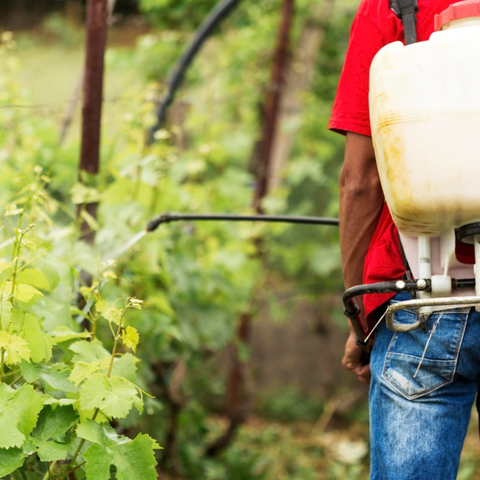
In agrochemical formulation development, an active ingredient that is potent in the laboratory is not necessarily effective in the field. The challenge lies in delivery: a very small dose of active ingredient must adhere to, spread across, and penetrate the tissue of the target plant or pest. Pesticide surfactants bridge the gap between theoretical efficacy and actual field performance.
This article discusses the physicochemical mechanisms of surfactants on the leaf surface, surfactant selection based on HLB value, laboratory test parameters, and the criteria for choosing a pesticide surfactant supplier that can support the technical needs of R&D teams.
Why Is It Hard for Active Ingredients to Penetrate the Leaf Surface?
The leaf surface has evolved to retain water within the tissue and repel liquids from the outside. Its outermost layer, the cuticle, consists of a cutin matrix coated with epicuticular wax and intracuticular wax. This lipophilic structure makes the leaf surface highly hydrophobic.
Most pesticide applications use water as the carrier. Water has a surface tension of approximately 72 mN/m (equivalent to 72 dyne/cm) at room temperature. On a waxy leaf, the cohesive forces between water molecules outweigh the adhesive forces to the leaf surface. As a result, droplets form round beads with a large contact angle (beading), roll off easily (run-off), or evaporate before the active ingredient can penetrate through the cuticle or stomata.
Loss of active ingredient at this stage directly leads to inconsistent efficacy, higher dose requirements, and a greater environmental residue burden.
Three Mechanisms of Pesticide Surfactant Action
Surfactants (surface active agents) are amphiphilic molecules. Each molecule has a hydrophilic group with an affinity for water and a lipophilic group with an affinity for oil or wax. This structure allows surfactants to act at the interface between liquid, air, and the leaf surface through three main mechanisms.
1. Surface Tension Reduction: Wetting and Spreading
Surfactant molecules migrate to the air–water interface and lower the surface tension of the spray solution. Conventional nonionic surfactants generally reduce it to the range of 28–35 mN/m, while organosilicone surfactants can reach approximately 20–22 mN/m. Equally important is dynamic surface tension: how quickly surfactants reach a newly formed interface as the droplet is created and impacts the leaf, within milliseconds.
Lower surface tension reduces the contact angle. The droplet collapses, spreads, and wets the wax layer as a thin, uniform film. Wider coverage increases the likelihood that the active ingredient will contact its target, whether leaf tissue or pest.
(Read also: Understanding the Types of Pesticide Additives for Effective Agricultural Formulations)
2. Improved Retention and Rainfastness
On plants with smooth leaves, large droplets tend to bounce or roll off on impact. Surfactants help increase spray retention on the surface. Some surfactants or specialty chemicals also act as stickers, helping the active ingredient deposit adhere after drying.
This is particularly relevant for formulations intended for tropical climates such as Indonesia, where sudden rain after spraying can wash active ingredients off the leaf surface. Rainfastness should be evaluated through rain simulation tests, as the results depend on the combination of active ingredient, surfactant, and crop type.
3. Cuticle Modification: Penetration and Translocation
The lipophilic portion of the surfactant is compatible with epicuticular wax. At certain concentrations and with certain surfactant types, surfactants can dissolve or soften part of the wax and alter its crystalline structure, making it more permeable. This increases the rate at which the active ingredient diffuses across the cuticle. With certain super-spreader surfactants, such as organosilicones, the liquid can even enter through the stomata (stomatal infiltration).
After crossing the cuticle, systemic active ingredients can be translocated through the xylem, the phloem, or both, depending on their physicochemical properties, such as lipophilicity (log Kow) and acid–base character. Surfactants assist the initial uptake stage, but the final translocation pattern is still determined by the characteristics of the active ingredient.
Selecting Pesticide Surfactants Based on HLB Value
For formulators, surfactant selection should be based on measurable parameters. One of the most common is the HLB (Hydrophilic-Lipophilic Balance), a scale describing the balance between the hydrophilic and lipophilic groups of a surfactant, generally ranging from 0 to 20 for nonionic surfactants (the Griffin scale).
Function | HLB Range (indicative) | Application notes |
Water-in-oil (W/O) emulsifier | 3–6 | Invert emulsions; predominantly lipophilic surfactants. |
Wetting agent | 7–9 | Common in SC and WP formulations to wet solid particles and leaf surfaces. |
Oil-in-water (O/W) emulsifier | 8–18 | Basis of EC and EW systems; typically a blend of nonionic and anionic surfactants. |
Solubilizer | 15–18 | Solubilizes lipophilic components in the aqueous phase. |
The ranges above are indicative. The required HLB depends on the solvent, active ingredient, and oil phase used. In practice, emulsion stability in the spray tank (tank mix) is often achieved by combining two or more surfactants with different HLB values, for example a blend of nonionic and anionic emulsifiers in Emulsifiable Concentrate (EC) formulations. The right combination helps prevent creaming, segregation, and flocculation.
(Read also: Specialty Chemicals vs. Commodity Chemicals: What Is the Difference?)
Test Parameters to Evaluate in the Laboratory
Before a formulation is scaled up, R&D teams generally evaluate the following parameters:
- Static and dynamic surface tension at use concentration.
- Contact angle on the target leaf surface or a waxy model surface.
- Emulsion stability and re-emulsification across various water hardness levels, following standard methods such as CIPAC.
- Storage stability, including accelerated storage and low-temperature stability.
- Tank mix compatibility with other active ingredients and accompanying additives.
- Phytotoxicity on the target crop, as overly aggressive surfactants can damage leaf tissue.
Criteria for Choosing a Credible Pesticide Surfactant Supplier
Understanding how surfactants work is only the first step. The next challenge for agrochemical manufacturers is securing raw material supply that is consistent in quality and compliant with regulations. A credible supplier acts as a technical partner, not merely a trader. Several criteria to consider:
- Complete technical documentation, including a Certificate of Analysis (CoA), Technical Data Sheet (TDS), and Safety Data Sheet (SDS) for every batch.
- Batch-to-batch consistency in critical parameters such as hydroxyl value, water content, and ethoxylation degree distribution.
- New-generation, more environmentally friendly surfactant options as alternatives to Nonylphenol Ethoxylate (NPE), which is restricted in the European Union and several other jurisdictions.
- Laboratory support, including responsive test samples and assistance with formulation compatibility and stability evaluation.
- Regulatory compliance and raw material traceability suited to the target market.
Frequently Asked Questions
What is the function of surfactants in pesticides?
Surfactants lower the surface tension of the spray solution so the liquid can spread and wet the leaf surface, improve retention, and help the active ingredient penetrate the cuticle. The result is more consistent efficacy at the same dose.
What is the difference between surfactants and pesticide adjuvants?
Adjuvant is a broader term for all additives that improve the application performance of a pesticide, including surfactants, oils, pH adjusters, defoamers, and drift control agents. Surfactants are one class of adjuvant.
How do I determine the HLB value for an EC formulation?
Start from the required HLB of the oil phase (solvent and active ingredient), then test blends of nonionic and anionic emulsifiers at several ratios. Choose the combination that gives a spontaneous, stable emulsion across a range of water hardness levels.
Why is NPE being phased out of agrochemical formulations?
Nonylphenol metabolites are toxic to aquatic organisms and persistent in the environment, so the use of NPE is restricted under a number of regulations. Alternatives include alcohol ethoxylates and alkyl polyglucosides, whose performance must be validated in each formulation.
Conclusion
Pesticide surfactants play a key role in ensuring that the active ingredient does not stop at the leaf surface. Through surface tension reduction, improved retention, and cuticle modification, surfactants help increase the efficiency of active ingredient delivery and the consistency of field efficacy. The right surfactant type and HLB value must still be validated through laboratory and field trials.
For agrochemical producers who want to develop more reliable formulations, partnering with a pesticide surfactant supplier that understands the technical needs of R&D is a strategic step. PT Jaya Warindo Abadi (JWA) offers a portfolio of high-performance surfactants and additives, together with technical support to help your R&D team overcome formulation challenges. Contact the JWA technical team for consultation and test sample requests.