
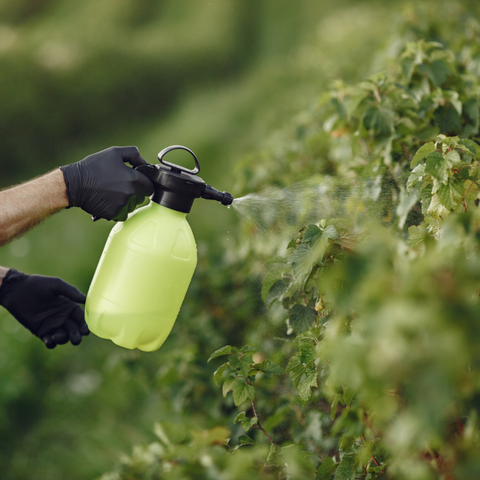
In the agrochemical or crop protection industry, the efficacy of a pesticide product cannot rely entirely on the superiority of its active ingredient (AI). Chemical compounds designed to eradicate pests, weeds, or fungi often possess physicochemical properties that complicate direct application. Many active ingredients are naturally lipophilic (insoluble in water), highly viscous, susceptible to UV degradation, or exhibit poor adhesion to plant leaf surfaces.
To overcome these structural challenges, expert formulators heavily rely on Pesticide Additives. These additives are inert compounds (not directly toxic to target pests) blended into the formulation to modify the fluid's physical properties, facilitate dissolution, and maximize the transfer of the active ingredient to the biological target.
This article will comprehensively discuss the primary types of additives used in modern pesticide formulations, their technical functions, and why selecting the right additive is key to the commercial success of agrochemical products.
Why Are Pesticide Additives So Crucial?
Pesticide spraying applications in the field face numerous natural barriers. Plant leaves are generally covered by a water-repellent (hydrophobic) waxy cuticle layer. If a water-based pesticide is sprayed without modifying its surface tension, the liquid will merely form spherical droplets that easily roll off into the soil before being absorbed by the leaf stomata.
Additionally, environmental factors such as wind (causing spray drift) and premature evaporation due to heat can reduce the effective dose reaching the plant. This is where functional additives come into play: lowering water surface tension, preventing active ingredient crystallization, maintaining suspension to prevent settling in the spray tank, and protecting compounds from environmental degradation.
Types of Pesticide Additives Based on Their Functions
Agrochemical formulations come in various dosage forms, such as Emulsifiable Concentrates (EC), Suspension Concentrates (SC), and Water Dispersible Granules (WG). Each of these formulation types requires specific additives:
1. Surfactants (Wetting & Spreading Agents)
Surfactants (Surface Active Agents) are the most common and crucial class of additives in the agricultural sector. Surfactant molecules have two functional ends: a hydrophilic end that binds to water and a lipophilic end that binds to oil or waxy materials.
Their primary task is to reduce the surface tension of the pesticide liquid. With the help of surfactants, water droplets that initially bead up will immediately spread and evenly wet the waxy plant leaf surfaces. The penetration of active ingredients through the cuticle becomes significantly faster and more efficient. As a trusted Pesticide Surfactant Supplier, a chemical provider must be able to offer non-ionic, anionic, or cationic surfactant specifications tailored to the formulation's pH.
2. Emulsifiers
Emulsifiers are essential for EC and EW (Emulsion in Water) based formulations. Many pesticide active ingredients can only be dissolved in oil or organic solvents. When farmers mix these pesticides with water in a spray tank, oil and water will naturally separate (phase segregation). The use of high-quality emulsifiers ensures that the oil solvent can break down into microscopic droplets and form a stable, milky-white emulsion in water, ensuring the sprayed dose remains homogeneous from start to finish.
3. Dispersants
Unlike emulsifiers that work on liquids, dispersants are used for solid or crystalline active ingredients, such as in SC or Wettable Powder (WP) formulations. Dispersants prevent micro-sized solid particles from sticking together (agglomerating) and settling at the bottom of the packaging. Dispersants attach to the surface of solid particles and create electrostatic repulsion or steric hindrance, keeping the particles stably suspended in the solvent.
4. Additional Solvents (Solvents & Co-Solvents)
Besides water, the agrochemical industry utilizes specific organic solvents to dissolve high-melting-point active ingredients. Selecting the right Solvents is determined not only by their solvency power but also by their safety profile. Current global trends lean towards the use of environmentally friendly solvents with minimal volatility that do not cause phytotoxicity (poisoning) in cultivated plants.
5. Antifoam and Rheology Additives
The presence of surfactants in a mixture often triggers excessive foam formation during agitation in the spray tank. This foam can cause operational issues such as tank overflow or pump cavitation. Therefore, adding antifoam compounds (usually silicone-based) in small doses is highly necessary. Furthermore, rheology modifiers (thickeners) are added to control the product's viscosity during long-term storage.
Formulation Challenges and Selecting Pesticide Additives in Indonesia
The tropical climate in Southeast Asia presents a dual challenge for pesticide products. Relatively hot warehouse storage temperatures can trigger liquid phase separation, while high rainfall during the planting season has the potential to wash pesticides off leaves before the active ingredients have a chance to react (rainfastness issues).
Therefore, when selecting Pesticide Additives in Indonesia, formulators must ensure that the combination of surfactants and dispersants used can provide extreme adhesion and resistance to rain wash-off (sticker & rainfast agents).
Conclusion: Partnering with a Technical Chemical Distributor
Designing a thermodynamically stable pesticide formulation with high field efficacy is a task that requires profound chemical expertise and consistent raw material quality. Additive selection cannot be done arbitrarily, as incompatibilities between ingredients can lead to product failure, causing losses for both manufacturers and farmers.
As a technically-oriented chemical supplier with experience since 1989, PT Jaya Warindo Abadi (JWA) understands this complexity. We collaborate with leading global brands to supply top-tier functional additives for the agrochemical sector.
Contact the Jaya Warindo technical team to get the best pesticide additive formulation solutions for your company.