
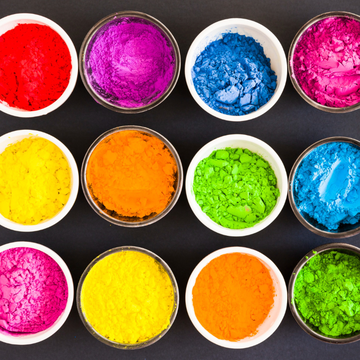
In the paint industry, pigments are among the most important components that determine color quality, hiding power, durability, and the overall aesthetic value of a product. Whether used in automotive, decorative, wood, or industrial coatings, the type of pigment selected has a significant impact on the final performance of the paint.
For paint manufacturers, understanding the different types of pigments is essential for creating products that can compete effectively in the market. This article provides a comprehensive overview of pigment types used in the paint industry, their functions, and the key factors to consider when selecting high-quality raw materials.
What Are Pigments in the Paint Industry?
Pigments are finely divided solid particles that are insoluble in liquid media and are used to provide color, opacity, and protection to paint films.
Unlike dyes, which dissolve in solvents, pigments remain in particulate form, allowing them to deliver more stable and long-lasting color performance.
In paint formulations, pigments serve several important functions:
- Providing color to the paint
- Improving surface hiding power
- Enhancing decorative appeal
- Increasing UV resistance
- Protecting against corrosion
- Improving resistance to weathering and chemicals
Because pigments play such a critical role, their selection must be tailored to the intended application and the desired performance characteristics of the final product.
Classification of Pigments for the Paint Industry
In general, pigments used in the paint industry can be categorized into three main groups:
1. Color Pigments
Color pigments are primarily responsible for providing color to paint systems. They are available in a wide range of shades with varying levels of brightness, intensity, and durability.
Color pigments are divided into two major categories:
Organic Pigments
Organic pigments are derived from synthetic carbon-based compounds that produce bright and vibrant colors.
Characteristics of organic pigments include:
- Brilliant and vivid colors
- High tinting strength
- Fine particle size
- Ideal for decorative applications
Examples of organic pigments:
- Phthalocyanine Blue
- Phthalocyanine Green
- Quinacridone Red
- Diarylide Yellow
- Permanent Red
Organic pigments are widely used in:
- Decorative paints
- Automotive coatings
- Printing inks
- Colored plastics
Inorganic Pigments
Inorganic pigments are derived from minerals or specific metal compounds.
Key characteristics include:
- Excellent weather resistance
- High heat stability
- Strong chemical resistance
- Cost-effective pricing
Examples of inorganic pigments:
- Iron Oxide Red
- Iron Oxide Yellow
- Chromium Oxide Green
- Ultramarine Blue
- Carbon Black
These pigments are commonly used in:
- Industrial coatings
- Architectural paints
- Metal coatings
- Anti-corrosion paints
2. White Pigments
White pigments play a crucial role in providing opacity and enhancing brightness in paint formulations.
The most widely used white pigment is:
Titanium Dioxide (TiO₂)
Titanium Dioxide is the most commonly used white pigment worldwide.
Advantages of Titanium Dioxide include:
- Exceptional hiding power
- Superior whiteness
- Excellent UV resistance
- Outstanding weather stability
- Safe for a wide range of applications
Because of its outstanding performance, Titanium Dioxide is a primary raw material in:
- Wall paints
- Wood coatings
- Automotive paints
- Industrial coatings
- Powder coatings
It is often referred to as the "king of white pigments" in the coatings industry.
3. Special Effect Pigments
As coating technology continues to evolve, the demand for unique visual effects has increased significantly. Special effect pigments are used to create premium and eye-catching finishes.
Some common types include:
Metallic Pigments
Metallic pigments provide a reflective, metal-like appearance.
Examples include:
- Aluminum Pigment
- Bronze Powder
Common applications:
- Automotive coatings
- Wheel coatings
- Premium decorative paints
Pearl Pigments
Pearl pigments create luxurious pearlescent effects that change depending on the viewing angle.
Benefits include:
- Color-shifting visual effects
- Elegant appearance
- Suitable for premium products
Common applications:
- Automotive paints
- Cosmetics
- Premium packaging
Fluorescent Pigments
Fluorescent pigments produce highly vibrant and attention-grabbing colors.
They are commonly used in:
- Road marking paints
- Safety coatings
- Signage
- Promotional products
Anti-Corrosion Pigments for Industrial Coatings
In heavy industrial applications, pigments do more than provide color—they also help protect metal surfaces from corrosion.
Some of the most widely used anti-corrosion pigments include:
Zinc Phosphate
Zinc Phosphate is one of the most commonly used anti-corrosion pigments today.
Its benefits include:
- Effective rust protection
- Environmentally friendly profile
- Compatibility with various coating systems
Zinc Dust
Zinc Dust is commonly used in zinc-rich primer formulations.
Its primary functions include:
- Providing galvanic protection
- Extending the lifespan of steel structures
Typical applications include:
- Bridges
- Storage tanks
- Industrial facilities
- Steel structures
Important Factors When Choosing Pigments for the Paint Industry
Selecting a pigment should involve more than simply choosing a color. Several critical factors must be considered:
1. Opacity (Hiding Power)
The higher the opacity of a pigment, the less paint is required to cover a surface effectively.
This improves production efficiency and helps reduce formulation costs.
2. Weather Resistance
For exterior applications, pigments must withstand:
- UV radiation
- Rain and moisture
- Temperature fluctuations
- Humidity
Inorganic pigments generally offer superior weather resistance.
3. Chemical Stability
Industrial coatings are often exposed to aggressive chemicals. Therefore, pigments should be resistant to:
- Acids
- Alkalis
- Solvents
- Other industrial chemicals
4. Tinting Strength
Pigments with high tinting strength can achieve strong color intensity even when used in relatively small quantities.
This characteristic helps improve cost efficiency in manufacturing.
5. Particle Size
Pigment particle size affects several aspects of coating performance, including:
- Gloss level
- Dispersibility
- Color consistency
- Surface finish quality
The better the particle size distribution, the more optimal the final coating performance.
Trends in Modern Paint Pigments
The coatings industry continues to evolve as demand grows for environmentally friendly and high-performance products.
Some current pigment trends include:
Eco-Friendly Pigments
Manufacturers are increasingly adopting pigments with lower heavy metal content that comply with global environmental regulations.
High-Performance Pigments
Next-generation pigments offer:
- Improved UV resistance
- Better color stability
- Longer service life
Pigments for Smart Coatings
Smart coating technologies are beginning to utilize specialized pigments that provide additional functionalities such as:
- Heat reflection
- Antibacterial properties
- Anti-static performance
- Temperature-sensitive indicators
These innovations create new opportunities for manufacturers to develop higher-value coating products.
The Role of an Industrial Chemical Distributor in Supplying Quality Pigments
The quality of pigments largely depends on the source of raw materials. Therefore, partnering with a reliable industrial chemical distributor is essential for paint manufacturers.
An experienced distributor can typically provide:
- Consistent product quality
- Complete quality certifications and documentation
- Stable product availability
- Technical support for formulation development
- Access to pigments from reputable global brands
Beyond ensuring product quality, the right distributor can also help manufacturers optimize production costs by recommending raw materials that best suit their application requirements.
Conclusion
Pigments are fundamental components in paint formulations, influencing color, opacity, durability, and overall coating performance. In general, pigments for the paint industry can be classified into color pigments, white pigments, and special effect pigments, each offering unique characteristics and benefits.
Choosing the right pigment requires careful consideration of factors such as hiding power, weather resistance, chemical stability, and application requirements. For this reason, working with a trusted industrial chemical distributor is crucial to ensuring a reliable supply of high-quality raw materials.
Get High-Quality Pigments and Industrial Chemicals from Jaya Warindo
Are you looking for premium pigments and raw materials for paint, coatings, inks, plastics, or other manufacturing applications?
Jaya Warindo provides a comprehensive range of industrial chemicals with guaranteed quality, professional technical support, and reliable supply solutions to support your production needs.
As the official distributor of BYK, Ralston, and Getzmann in Indonesia, PT Jawa Warindo Abadi is committed to helping industries achieve superior product performance through high-quality raw materials and expert support.