
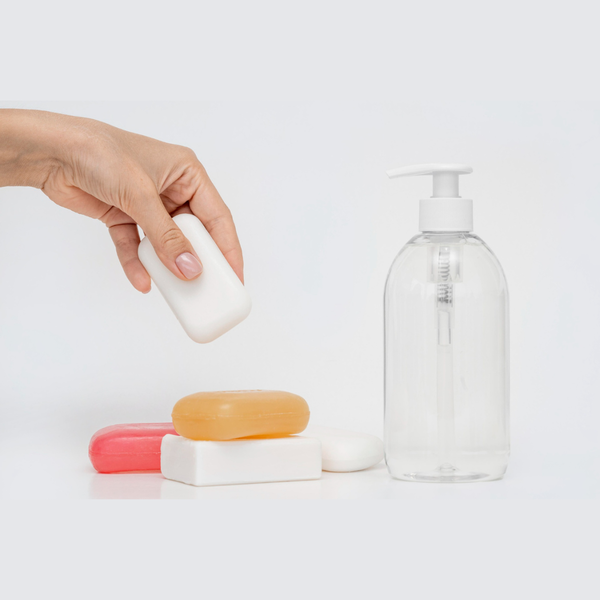
In the personal care and home care industry, microbiological stability is one of the key parameters that determines product quality. Liquid soap and bar soap, being rich in water and organic nutrients, are highly susceptible to bacterial growth. Without an effective protection system, microbial contamination not only damages the product's appearance, smell, and viscosity, but also threatens consumer safety and your brand's reputation.
Using the right soap preservative chemicals is the key to keeping products safe throughout their shelf life. However, determining the dosage or concentration of a preservative system cannot be based on guesswork. A dose that is too low (under-dosing) leaves the product vulnerable to contamination, while a dose that is too high (over-dosing) risks causing skin irritation and inflating production costs.
As an experienced Industrial Chemical Supplier, PT Jaya Warindo Abadi has put together this guide for Research & Development (R&D) teams and formulators on determining preservative concentration accurately and efficiently.
(Read also: Choosing Liquid Detergent Thickeners: Mechanisms and Parameters for Industrial Formulation)
Contamination Risks in Liquid and Bar Soap
Before calculating preservative concentration, it's important to understand the microbiological risks associated with liquid soap and bar soap.
Liquid Soap
Liquid soap (such as body wash, hand soap, and liquid detergent) has a very high water content, typically ranging from 70%-90%. High water activity (a_w) creates an ideal environment for the growth of gram-negative bacteria (Pseudomonas aeruginosa), gram-positive bacteria (Staphylococcus aureus), as well as mold and yeast. For this reason, liquid soap formulations should offer broad-spectrum protection.
Bar Soap
Bar soap made through traditional saponification generally has a very high pH (9-10) and relatively lower water activity after the drying process, which inhibits microbial growth. However, synthetic bar soaps or those made from natural oils with a more neutral pH (5.5-7.0) still carry contamination risk, particularly when the product is repeatedly exposed to water in a damp soap dish.
Key Factors in Determining Preservative Dosage
Determining an effective preservative concentration requires a thorough evaluation of the formulation's characteristics. Here are five key factors R&D teams must consider before setting the preservative dosage:
1. Formulation pH Range
- Organic Acids (such as Sodium Benzoate / Sorbic Acid): Only effective at acidic to weakly neutral pH (pH < 5>
- Isothiazolinones (CMI/MI, BIT): Have a wide working pH range (pH 2.0-9.0), making them well suited to neutral or slightly alkaline liquid soaps.
- Phenoxyethanol: Stable across a pH range of 3.0-10.0, making it a flexible choice for a wide range of body care products.
2. Water Activity (a_w)
The higher a product's a_w value, the greater the Minimum Inhibitory Concentration (MIC) of preservative required. For water-based products, a fully water-soluble preservative is the preferred choice, ensuring the preservative molecules are distributed evenly throughout the soap matrix.
3. Compatibility with Other Raw Materials
- Non-ionic Surfactants: Highly ethoxylated surfactants (such as Polysorbate or PEGs) can bind phenolic preservative or paraben molecules through micelle formation, reducing the concentration of free, active preservative.
- Use of Chelating Agents: Adding chelating agents such as EDTA or Phytic Acid has been shown to significantly increase the sensitivity of gram-negative bacterial cell walls. Combining chelators can lower the required preservative dose without reducing protective efficacy.
4. Production Process Temperature (Thermostability)
Some preservatives are heat-sensitive. If the soap-making process requires a heating phase above 60°C-80°C (such as melting the soap base or processing an emulsion), the preservative should be added during the cool-down phase (< 45>
5. Packaging Type and Method of Use
Liquid soap in pump-bottle packaging carries a lower risk of external contamination compared to products in open-jar containers or bar soap left out in the open. Products with repeated air exposure require a preservative system with a concentration robust enough to withstand secondary contamination.
Determining Concentration Through Challenge Testing
Although chemical manufacturers provide standard dosage recommendations, these figures are only a starting guideline. The most reliable way to determine the optimal concentration is to conduct Preservative Efficacy Testing (PET), commonly known as a Challenge Test.
The Challenge Test procedure works as follows:
- Inoculate soap samples with standard microbial strains (such as aeruginosa, E. coli, S. aureus, C. albicans, and A. brasiliensis) at a specific concentration.
- Measure the reduction in microbial colony counts at specific time intervals (Day 7, 14, 21, and 28) in accordance with ISO 11930 or USP <51> standards.
- Evaluate the microbial log reduction curve to confirm that the formulation meets preservation success criteria.
Through this testing, R&D teams can identify the smallest MIC concentration capable of killing microbes optimally.
Recommended Preservative Systems for the Soap Industry
As consumer awareness of skin-safe chemicals grows, the personal care industry is placing increasing emphasis on paraben-free and formaldehyde donor-free preservatives. Below are several preservative combination options for modern soap formulations:
Preservative Type | Main Target | Formulation Advantages | Ideal Application |
Isothiazolinone Blend (BIT/MIT or CMI/MI) | Bacteria & Fungi | Effective at very low doses, cost-effective, fully water-soluble | Rinse-off liquid soap, liquid detergent |
Phenoxyethanol + Ethylhexylglycerin | Broad Spectrum | Paraben-free, gentle on skin, stable across a wide pH range | Body wash, baby soap, facial wash |
Sodium Benzoate + Potassium Sorbate | Fungi & Yeast | Nature-identical preservative, safe for organic formulations | Liquid soap with acidic pH (pH 4.5-5.5) |
Formulation Development Solutions with PT Jaya Warindo Abadi
Determining a precise preservative concentration requires a combination of quality raw materials and accurate analysis. As a trusted Soap Preservative Chemical Distributor in Indonesia, PT Jaya Warindo Abadi not only supplies specialty raw material chemicals, but also adds value through Microbiology Laboratory Services & Technical Support.
Our expert team is ready to provide the best formulation recommendations and microbiological testing to help you create the best possible products for your company.
Tags: Soap Preservative Ingredients, Liquid Soap Preservative Chemicals, Liquid Soap Preservative, Bar Soap Preservative, Challenge Test, Soap Industry Preservatives